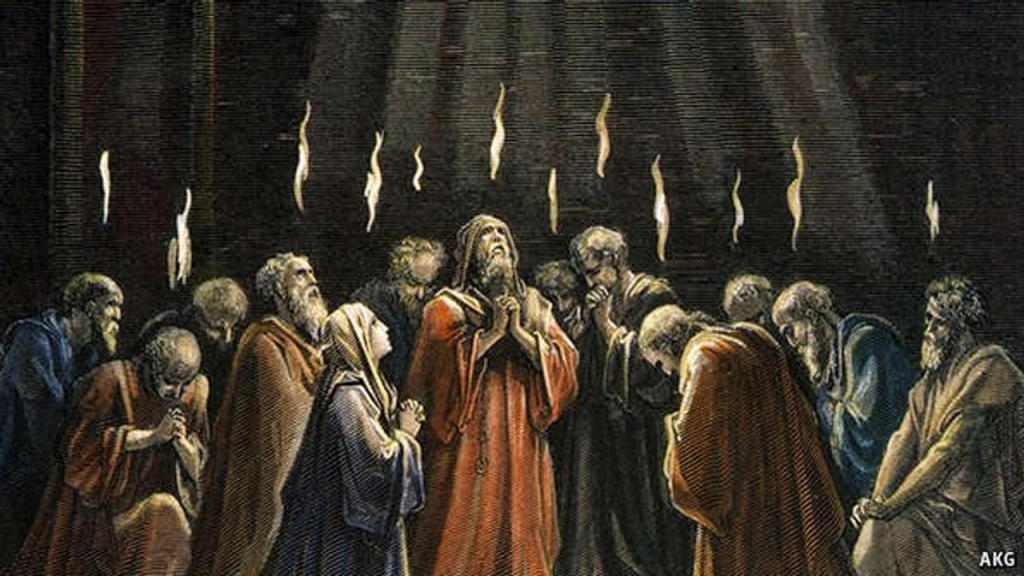
The gift of speaking in an unknown tongue is not new in the body of Christ. Christ long spoke of it as a sign that should follow those that believe in him. Mark 16:17 And these signs shall follow them that believe; In my name shall they cast out devils; they shall speak with new tongues;
There are different aspects of speaking in tongues.
1. That has to do with publicly addressing the church, under an urge by the Spirit or spiritual ecstasy. Characteristic of this is that it has a message for the audience, or it is intended to carry the audience along. This aspect needs interpretation. 1 Cor 14:13,26-28
2. That has to with praying (1 Cor 14:14). This is more personal than it is congregational. It is a prayer language. In this case, though the individual does not understand what he is saying, in the realm of the Spirit, he is actually praying meaningful words — he is praying meaningfully in the language of the Spirit. We should not expect God to have spoken English, Hebrew, Greek, Latin or French when he said, “Let us make man” or when He was creating the earth as he wasn’t speaking an earthly language. The Bible talks of tongues of men and angels (1 Cor 13:1). That obviously points to earthly and heavenly languages. God hears all languages, and speak all languages. Language is for communication, and though we don’t understand what is prayed in other tongues, the bottom line is that underneath it there is communication. This is the faith and knowledge of the spiritual man, that utterances given by the Spirit cannot be empty and vain no matter how odd it sounds to the ears.
3. That has to do with singing (1Cor 14:15,17). Singing in the Spirit is exclusively personal. He who is singing in tongues is singing to God. That the language is unknown to him does not stop the power of the song or hinder the inworking or outworking move of God in singing. On the contrary, the persons has actually broken through the limits of the natural to a direct access into the realm of the Spirit. Where he no longer sings from the natural mind but directly in the Spirit out of which words of mystical code flow out of him. That is gloriously raw — the flesh has given way completely to the Spirit in glorious ecstasy in worship.
Praying in tongues does the following
1. Builds us spiritually
Prayer is the life blood of the Christian. Praying in the Spirit is a sure way of maximizing indwelling Spirit’s presence and power. It is a moment of exercising our innermost being in the operations of the Holy Spirit. That is why when a person is baptised with the Spirit, they more often than not break into tongues under the overwhelming operations of the Spirit in their spirit. In such instances their souls are partially absorbed into the Spirit and so spontaneous spiritual language unintelligible to the mind reels off their mouth consciously: the mind having never been acquainted with its usage cannot process its meaning though spoken in sentence form or mere inarticulate rapid sounds.
As we expose ourselves to full operations of the Spirit within us in the communion of prayer, we develop, sharpen, and heighten our spiritual ability and capacity . He who prays in tongues edifies himself. 1Cor 14:4
2. Help us pray well (1 Cor 14:17)
He who prays in tongues prays well. The Holy Spirit gives him the rights words to ask aright and touch the right areas of the the given issue of concern. He, moreover, prays through the person of the Holy Spirit. In such a situation though the man is involved in the prayer, he has let God take full charge, and has submitted adequately to the full help of the Spirit of God.
 Royal Flock of Christ Church