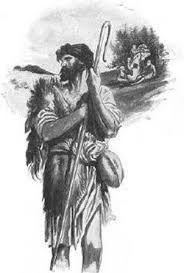
Who was a Nazarite?
NAZARITE (also Nazirite), the name for Israelites who took on them the vow prescribed in Numbers 6:2-21. Generally, the word denotes one who is specially separated through consecration unto God. Samson happens to be the first mentioned in scriptures, though many obviously should have existed before him.
The root-meaning of the word in Hebrew as well as the various Greek translations indicates the Nazirite as “a consecrated one” or “a devotee.” The Nazirite consecrated himself or herself, and took a vow of separation and prescribed discipline of abstinence. The Major Old Testament passages are Num 6; Judges 13:5-7; Judges 16:17; Amos 2:11, 12;
Nature of the vow
The Nazarite vow involved (1) abstinence from wine and strong drink, (2) refraining from cutting the hair off the head during the whole period of the continuance of the vow, and (3) avoidance of contact with the dead
The meaning of the Nazarite vow has been regarded in different lights. It may be regarded as an act of self-sacrifice, That it was essentially a sacrifice of the person to the Lord is obviously in accordance with the terms of the law. (Numbers 6:2) As the Nazarite was a witness for the straitness of the law, as distinguished from the freedom of the gospel, his sacrifice of himself was a submission to the letter of the rule. Its outward manifestations were restraints and eccentricities. The man was separated from his brethren that he might be peculiarly devoted to the Lord. This was consistent with the purpose of divine wisdom for the time for which it was ordained.
The Nazarite vow resembles the consecration of the high priest. (Leviticus 21:10-12)
Duration of the vow
Only three persons are mentioned in scriptures as Nazarites for life; viz, Samson, Samuel, and John the Baptist (Judges 13:4, 5; 1 Samuel 1:11; Luke 1:15). In its ordinary form, the individual seemed to choose how long his vow should last. The Old Testament, makes no mention of a prescribed period of duration. however, the Nazarite’s vow lasted 30, 60 or 100 days according to the Mishna.
Release from a Nazarite vow
When the period of separation was complete, the ceremonial of release had to be gone through. It consisted of the presentation of burnt, sin and peace offerings with their accompaniments as detailed in Numbers 6:13-21 , the shaving of the head and the burning of the hair of the head of separation, after which the Nazirite returned to ordinary life.
For some reason, probably in the midst of his work at Corinth, Paul took on himself the Nazarite vow. This could only be terminated by his going up to Jerusalem to offer up the hair which till then was to be left uncut. But it seems to have been allowable for persons at a distance to cut the hair, which was to be brought up to Jerusalem, where the ceremony was completed. This Paul did at Cenchrea just before setting out on his voyage into Syria (Acts 18:18). On another occasion (Acts 21:23-26), at the feast of Pentecost, Paul took on himself again the Nazarite vow. “The ceremonies involved took a longer time than Paul had at his disposal, but the law permitted a man to share the vow if he could find companions who had gone through the prescribed ceremonies, and who permitted him to join their company. This permission was commonly granted if the new comer paid all the fees required from the whole company (fee to the Levite for cutting the hair and fees for sacrifices), and finished the vow along with the others. Four Jewish Christians were performing the vow, and would admit Paul to their company, provided he paid their expenses. Paul consented, paid the charges, and when the last seven days of the vow began he went with them to live in the temple, giving the usual notice to the priests that he had joined in regular fashion, was a sharer with the four men, and that his vow
Types of Nazarite
The Pentateuch, then, makes provision for the Nazirite vow being taken by either men or women, though the Old Testament does not record a single instance of a female Nazirite. Further, it provides only for the taking of the vow for a limited time, that is, for the case of the “Nazirite of days.”
The only “Nazirites for life” that we know by name are Samson, Samuel and John the Baptist, but to these Jewish tradition adds Absalom in virtue of his long hair. We know of no one voluntarily taking the vow for life, all the cases recorded being those of parents dedicating their children
It is very likely that Nazirites became numerous in Israel in periods of great religious or political excitement, and in Judges 5:2 we may paraphrase, ‘For the long-haired champions in Israel.’ That they should be raised up was considered a special token of God’s favor to Israel, and the tempting of them to break their vow by drinking wine was considered an aggravated sin ( Amos 2:11 , Amos 2:12 ). At the time of the captivity they were looked upon as a vanished glory in Israel (Lamentations 4:7 margin), but they reappeared in later history.
 Royal Flock of Christ Church