Many immersionists argue that
- The word baptize means to immerse and that baptism is therefore an immersion or nothing else.
- Jesus’s baptism was by immersion
- That baptism pictures death and burial
- Immersion best pictures cleansing
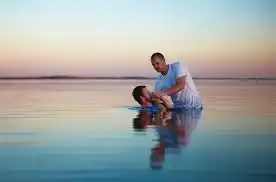
One thing is necessary to conclude from this line of argument and that is: since baptism is by immersion, the Apostles were immersionists. But observe that the Apostles never suffered any obstacles that immersion poses. Their practice and results therefore deny that they were immersionists. Observe that 1) They baptized converts without any previous arrangements, or preparation or anything put in place. Those who baptize by immersion know they must make adequate pre-information and preparations ahead for the exercise, such as change of clothes, building of baptismal pools, or transportation of converts to the nearest river, and crowd management. 2) They baptized their converts at the instance of their conversion. Any immersionist evangelist know that to baptize this way as a rule is an impossibility. 3) They baptized thousands at once. Any immersionist pastor who have baptized 50 at once will tell you immersion will be a worse option to baptize a crowd of thousands at once, let alone having it for a fixed practice.
Baptize did not always mean immerse in New Testament times
To get things right lets realize that baptizo from which the English word baptize is formed did not always mean to immerse but carried other ideas. The latitude of usage of the word in new testament times show that the word did not show mode but effect that can be achieved by different modes. One of such words is afflict, with the effect of causing a person pain or suffering, that can be done any how. Similar is the ceremony of anointing which can be done by smearing, pouring or rubbing with oil. The focus is that the person is consecrated by the application of oil.
Baptize in its latitude of usage conveyed the idea of
- Suffering — Mk 10:38,39; Lk 12:50
- Come upon — Act 1:8; Mt 3:11
- Initiate into — Rom 6:3; 1 Cor 12:13; Gal 3:27
- Washings — Heb 9:10
In 1 Cor 10:1-2, those who were not immersed were said to be baptized unto Moses not the Egyptians who were immersed.
The Greek words baptizo, baptismos, and baptisma do not fit immersion in all contexts of usage in the Bible.
The verb baptizo was used in the Bible to denote the ceremonial purification of the Jews before eating, by pouring water on the hands (Luke 11:38; Mark 7:4 )
Mark 7:4
And when they come from the market, except they wash, [Greek: baptizo] they eat not. And many other things there be, which they have received to hold, as the washing [Greek: baptismos] of cups, and pots, brasen vessels, and of tables.[Greek: Kline` = bed-table, couch]
Think of the Jews having to immerse their couches when they come from the market? When will it dry? Sincerely speaking, all these difficulties would not have been accepted by people in the Bible days. They were rational beings. All immersionists views are hanging on assumptions. They dogmatically take assumptions for facts to the hindrance of baptism in real life situations, even when New testament scriptures specifically calls sprinkling and pouring baptism in the divers baptisms of Hebrews 9:10-23, and in Holy Ghost baptism. What every sincere mind should consider is if immersion was the scriptural mode as commanded by Christ, why doesn’t it, of the three possible modes, be the best mode facilitating it, but rather the worst mode most hindering baptism in Bible scenes and immersionist churches all over the world.
As the Apostles went preaching Jesus everywhere and baptizing immediately, would there be enough water for immersion in every context. Think for yourself. These are real life scenes. Jesus had said to them, “Go ye into the whole world and baptize (Mt 24:19).” Paul was possibly baptized in a room by Ananias as the Douay Rheims Bible puts it, … And rising up, he was baptized. Or other translations, …he stood up and was baptized. Act 9:18 GNT, GWB. What about the jailer, Cornelius, the ten disciples Paul met at Ephesus. Would there just be water enough for immersion readily available in all scenario, or could they be immersed in a basin? Do we have nearby pools in every part of the world? Where would be the nearest river. Let’s be realistic — the Apostles could not have been immersionists. Could immersionist evangelists have water deep enough for immersion readily available to them to baptise immediately like the Apostles as they go about preaching Jesus? Or didn’t the Apostles preach all over the world and under varied circumstances? What about in desert areas? What about in winter and water scarcity? What about during high persecutions of the Apostles’ days? What about the sick? The heavy weighted? The very aged? What about in cold? Aren’t there people afraid of the river? What about market places? prison houses? hospitals? Refugee camps? Could every evangelist on the field or poor churches afford baptismal pools? Well, to surmount these difficulties the same immersionist preachers have chosen to acts differently from the Apostles, because they know better than the Apostles, and won’t baptise immediately, delay it as long as they like and may not even baptise at all, telling you it is not necessary for salvation but only for obedience, forgetting that obedience is necessary for salvation and that Jesus is author of salvation only to those who obey him. Hebrews 5:9
And why call ye me, Lord, Lord, and do not the things which I say? Luke 6:46
Diverse baptisms of Heb 9:10-23
From verse 10, we know that the lustratory rites of the succeeding context must come under the scope of divers baptisms. Observe that the several levitical washings and those mentioned earlier in the chapter were done by sprinkling. Lev 14:4-7, 16, 49-53; 16:1-9; Num 8:5-7; 19:18-19
These instances of the use of baptism (baptismos) of course do not denote actions involving immersion, but to be performed by other modes, i.e. sprinkling and affusion.
The descension of the Holy Spirit
The Holy Spirit descending upon the disciples at Pentecost was in the Bible called baptism with the Holy Spirit. To understand what the mode of water baptism was is simply by understanding what the mode of its counterpart was, mentioned in the same sentence. With the use of water and the Spirit in connection with baptism none is said to be in but with. So it is not “baptize you in water and in the Spirit”, but “baptize you with water and with the Spirit”. So how were they baptized with the Spirit? The Spirit was poured out upon, came upon, fell upon them. Act 2:17,33; Act 10:44; 11:15. That was how they were baptized with water. It was by affusion — water was poured on them.
Then remembered I the word of the Lord, how that he said, John indeed baptized with water; but ye shall be baptized with the Holy Ghost. Acts 11:16
Jesus’s Baptism couldn’t be by immersion
Research shows that the traditional site where John baptized at river Jordan isn’t very convenient for immersion and is usually in high torrent when it rains. Futher proofs that John could not have baptized by immersion is the fact that his ministry involved having to baptize daily, and not a few came to his baptism. The whole of Judea and Jerusalem flocked to his baptism. What preparations and arrangements could poor John the Baptist have made or modality put in place to baptize great multitudes who come from afar daily for immersion, he who lived in the wilderness? What energy could he have for such daily exercise who merely fed on locusts and wild honey? Even if he had disciples, why make the exercise so tedious? Immersion would involve change of raiments at least for those who came from afar. Where would they change at the open space of a river bank? What church does it that way today? And why should we think the people of the Bible days did not have the same common sense to avoid such? John simply chose a river and used a shallow part of it for his ministry that involved water. They walked in to him in the shallow water and he scooped water and poured it over them. Simply.
But for those who think walking into or out of the water proved immersion, it does not. Standing in a body of water which is only ankle deep, you are still in the water, not on the water.
Baptism not designed to picture death and burial
Those who quote Romans 6:3 think that baptism was designed to demonstrate burial with Christ. But it was not designed to and doesn’t demonstrate it.
Romans 6:3 Know ye not, that so many of us as were baptized into Jesus Christ were baptized into his death? 6:4 Therefore we are buried with him by baptism into death: that like as Christ was raised up from the dead by the glory of the Father, even so we also should walk in newness of life. 6:5 For if we have been planted together in the likeness of his death, we shall be also in the likeness of his resurrection: 6:6 Knowing this, that our old man is crucified with him, that the body of sin might be destroyed, that henceforth we should not serve sin.
Understand that in Romans 6 the Bible says we are baptised into his death before it went ahead to say we are buried with him by baptism. If we are baptised with him into his death, it means we die with him in the way he died (as explained in verse 5: …if we have been planted together in the likeness of his death…). We know his death was by crucifixion, and that’s why in verse 6 Paul says that we are crucified with him through baptism. So baptism does not only stand for his burial and resurrection, it stands for both his crucifixion and death as well. One has to die first before he can be resurrected, whether he is buried or not. Christ died crucified, and baptism does not demonstrate it. It is obvious that baptism into his death cannot demonstrate his death.
Buried with Christ in baptism does not still picture his burial. Christ was carried into a tomb and the door shut with a stone rolled across it. Immersion in water at best pictures a burial in which the earth is dug and the person is laid inside and sand poured over the corpse to cover him up so that in resurrection the person has to be pulled out. That may picture the burial of someone else, not Jesus whom sand did not touch. He resurrected like someone sleeping in a room, not as someone buried in the sand which water seems to demonstrate in the mode of immersion.
Water baptism is for cleasing and identification. When one receives New Testament baptism, that person is identified with Christ in his life, death, resurrection, and reign. (That is why the New Testament often refers to Christians as being “in Christ.”) Baptize into Christ means baptize in union with Christ; that is, one with him in all his finished work: crucifixion (Rom 6:6), death( Rom 6:5), burial ( Rom 6:4) and enthronement ( Eph 1:19-21; 2:6). Even so, those who are baptized into Christ have put on Christ; that is, they being in union with Christ, have been clothed with an identity of Christ (Gal 3:27). Nothing is intended to be demonstrated, neither his death by crucifixion, burial by entombment, resurrection from the dead, ascension into heaven, or enthronement at the right hand of the Father.
Furthermore, baptism could not be intended to demonstrate death and burial like people want to point to John as immersing, for even John the Baptist was not baptizing people into Jesus’ death nor his burial. John didn’t preach the death of Jesus. The only link he made of his baptism to Jesus’s was Christ’s majestic baptism of the people with the Holy Ghost which we know was done by affusion, an outpouring of the Spirit upon them.
Even the disciples of Jesus began baptising people as early as the days of John the Baptist when they did not even know Jesus would die and resurrect. Could they be asking people by baptism to demonstrate a burial they themselves have no idea of? Now, if Christ’s baptism was by immersion, was Christ required to demonstrate a death he was to physically die? They understood baptism as newness by reason of one being washed, in a sense, by water poured upon that person. It wasn’t a physical washing from dirtiness that a person had to be bathed or needed be immersed in water.
… even baptism..(not the putting away of the filth of the flesh… 1 Peter 3:21
Superfluous cleansing
It is not uncommon to see people think that immersion best demonstrate thorough cleansing from sin. Well that is Man’s view not God’s. One may as well think that a thorough bath with soap and sponge at the river will better demonstrate Naaman’s thorough cleansing from leprosy than mere dipping in a relatively small Jordan. Jesus cleansed lepers even by a single torch to a part of their body, not all over their body. Sin is a spiritual filth not a physical dirt that one needs a thorough bath. Jesus forgave sin even with the words of his mouth. Let God set the rule. Baptism is not a cleansing from bodily dirt. That our own view should determine how best it works. In the old covenant, the little quantity of sprinkling could purify and sanctify from uncleanness.
For if the blood of bulls and of goats, and the ashes of an heifer sprinkling the unclean, sanctifieth to the purifying of the flesh: Hebrews 9:13
In the new covenant, the blood of Christ cleansing the conscience is by the little quantity of sprinkling.
Let us draw near with a true heart in full assurance of faith, having our hearts sprinkled from an evil conscience, and our bodies washed with pure water. Hebrews 10:22
In Ezekiel 36:25, God says:
Then will I sprinkle clean water upon you, and ye shall be clean: from all your filthiness, and from all your idols, will I cleanse you.
Cleansing with God doesn’t necessarily need much water. Complex people should not forget the simplicity of the Gospel. 2 Corinthians 11:3 But I fear, lest by any means, as the serpent beguiled Eve through his subtilty, so your minds should be corrupted from the simplicity that is in Christ. What may best picture it is but man’s view, not God’s working.
Suffice to say that all this man’s own view was what culminated in the 3rd century nude baptism for complete immersion with all kinds of complex rituals such as completely rubbing of oil all over the unclothed body of someone to be baptized, baptismal pools for complete immersion, the baptism of ladies at night, fasting before baptism, renunciation of the devil and exorcism during baptism — a far cry from the way it was practiced in the Bible. Baptism became so high a ritual that its immediacy at conversion and simplicity as practiced by both John the Baptist and the Apostles of Christ were lost to complexity, delay, and man’s own undue high esteem and vain imaginations. This same man’s view birthed the bizarre unscriptural baptism by sand as have been heard.

